Marrying on Mallorca — what this island does to a wedding day

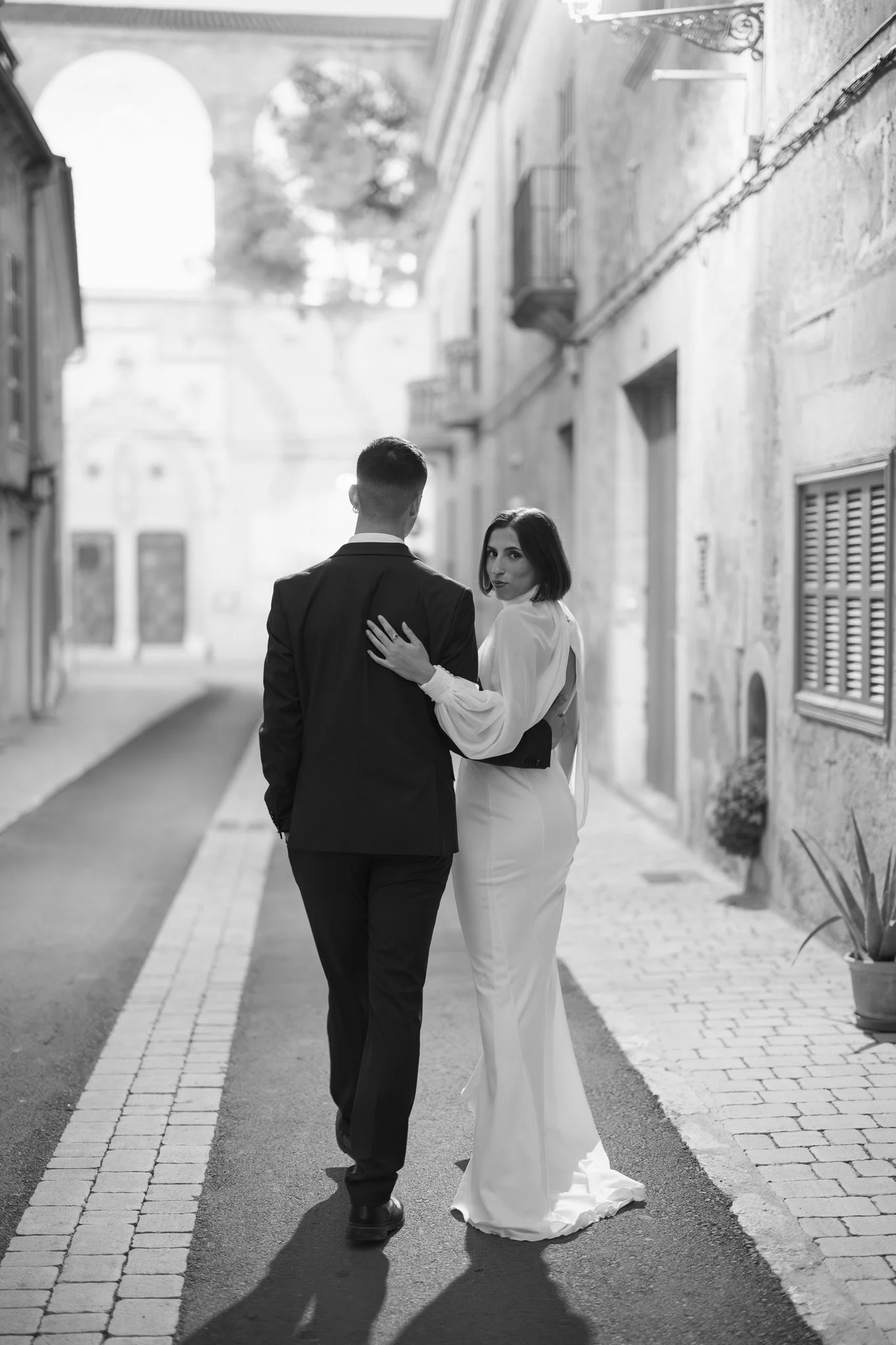
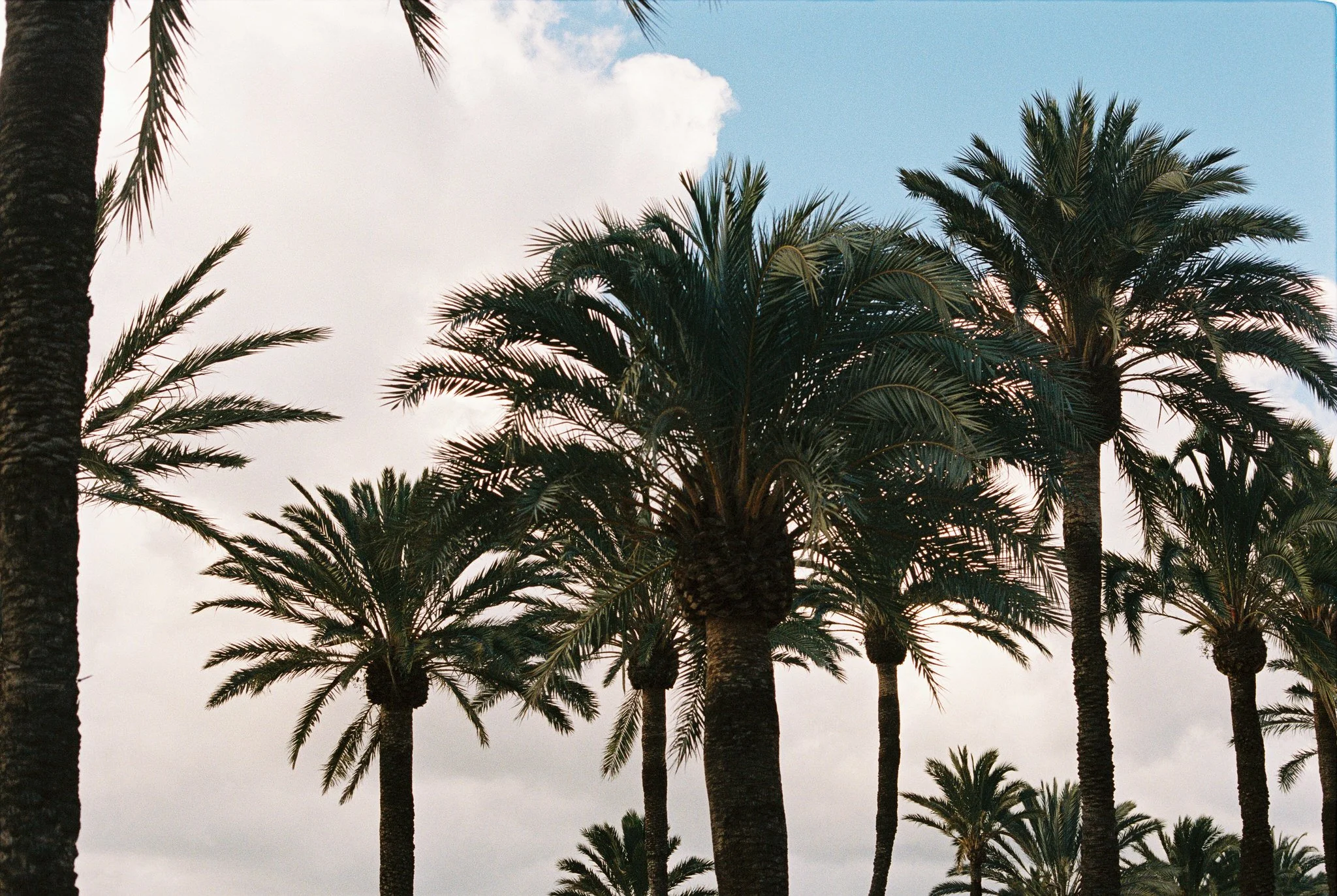
There's a moment at most Mallorca weddings — somewhere mid-morning, once the getting ready is mostly done — when the couple actually notices where they are. The light is coming in sideways through old stone. Outside, there are palm trees. Somewhere behind the finca, there are mountains. And things feel different than they do at home.
That's not something you can manufacture. But it's the reason the photographs look the way they do.
The light
I've photographed weddings in a lot of places. Mallorca does something specific with light that I've come to count on.
In September and October, the sun sits lower than you'd expect for this far south. Not the harsh overhead glare of summer — something warmer, more angled. Finca walls catch it differently than a hotel ballroom. Old terracotta tiles hold warmth. The olive trees filter it. It wraps rather than flattens, and it gives photographs a quality you can't replicate in post, because it was never in the file to begin with.
By the late afternoon, when couples step outside for their portraits, the light is often the best I'll have all year.
The fincas, the coast, and everything in between
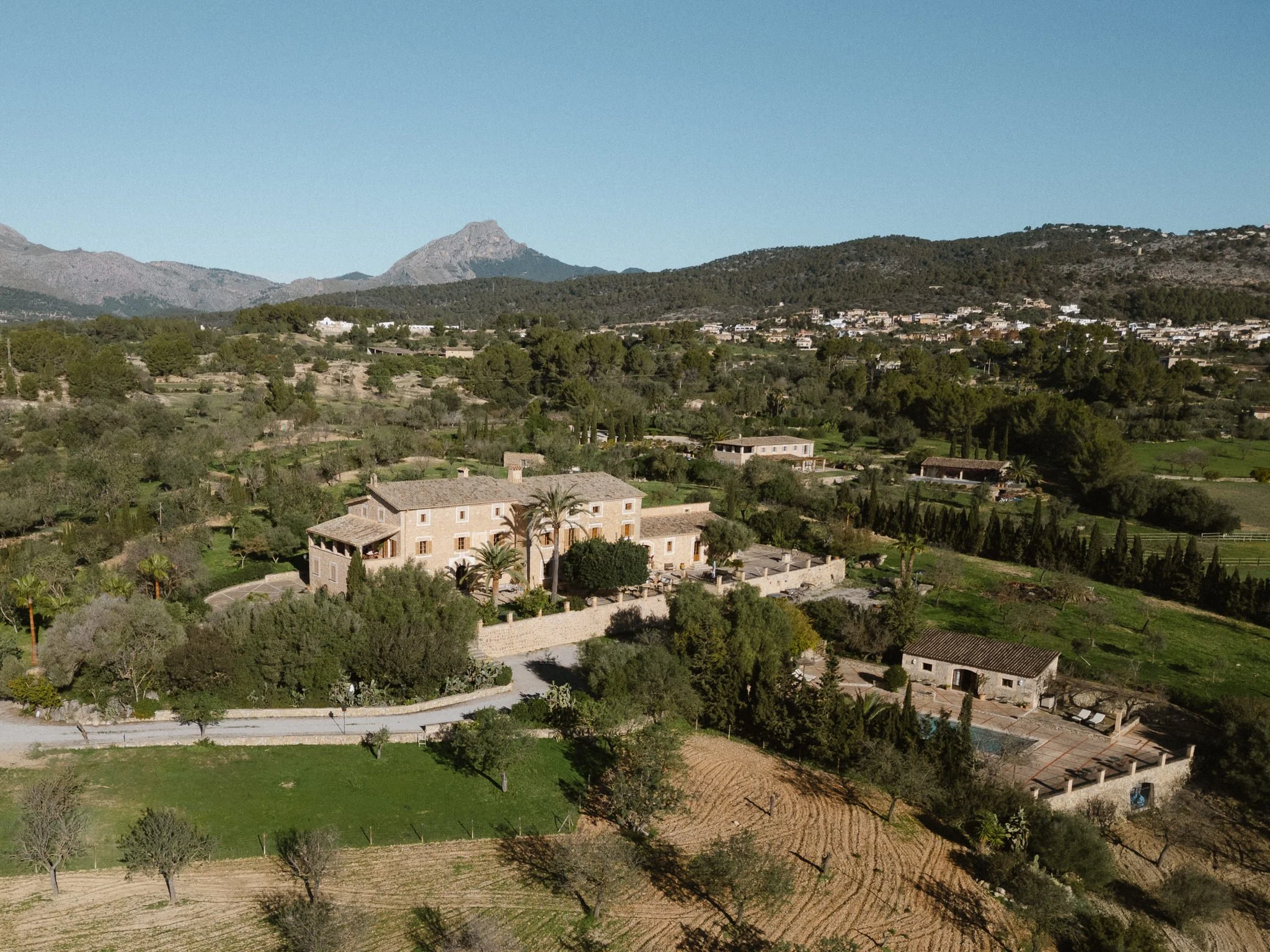
Mallorca has a particular kind of venue I keep coming back to. These old Mallorcan estates — sandstone, ancient olive groves, a view toward the Tramuntana mountains — have a presence that newer venues can't reproduce. Not because they're old, but because they were built to belong to this landscape rather than sit on top of it.
Flying over Finca Can Estades by drone, the main house sits in a valley bowl with the mountains rising directly behind it. It looks exactly like what it is: something that has been there a very long time. Weddings at places like this don't fight their surroundings. They settle into them.
Then there's the coast.
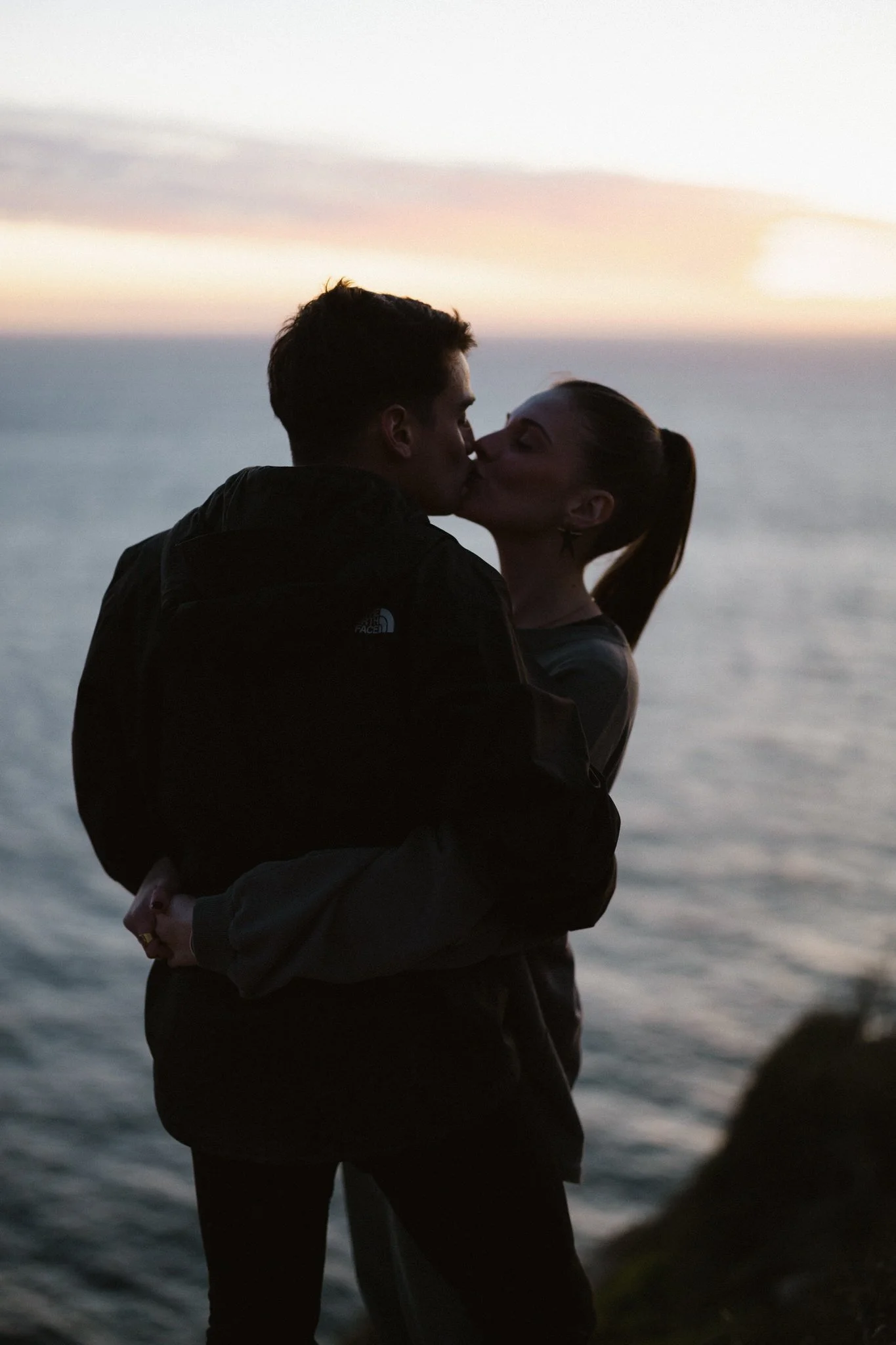
Mallorca's cliffs are sheer and dramatic, and at golden hour — sea three hundred meters below, sky turning from blue to peach — they give you photographs that are almost too simple. Two people, close, a lot of space. It usually works better than it has any right to.
What destination wedding actually means in practice
The assumption is that destination weddings are complicated. In practice, they often run more smoothly than weddings at home.
Fewer guests tend to mean a more deliberate day. People who've flown to an island to be there are already committed. Nobody's half-attending. The day moves differently — less obligatory, more chosen. You notice it in the room during the ceremony. You notice it at dinner.
For couples, a Mallorca wedding usually means a smaller circle. For me as a photographer, it means more time, fewer logistical constraints, and a location that's actively working in the same direction as the photographs rather than just sitting in the background.
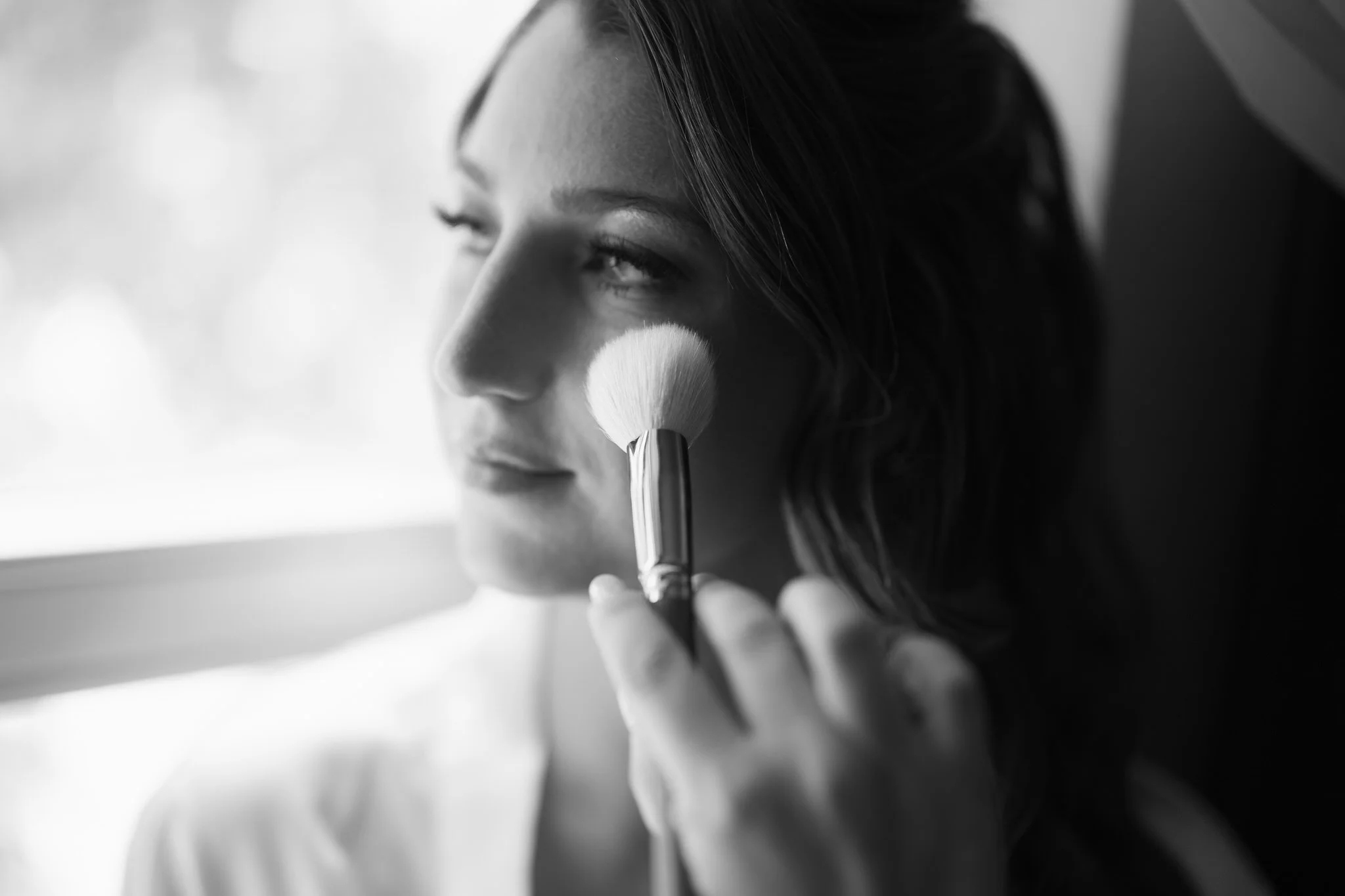
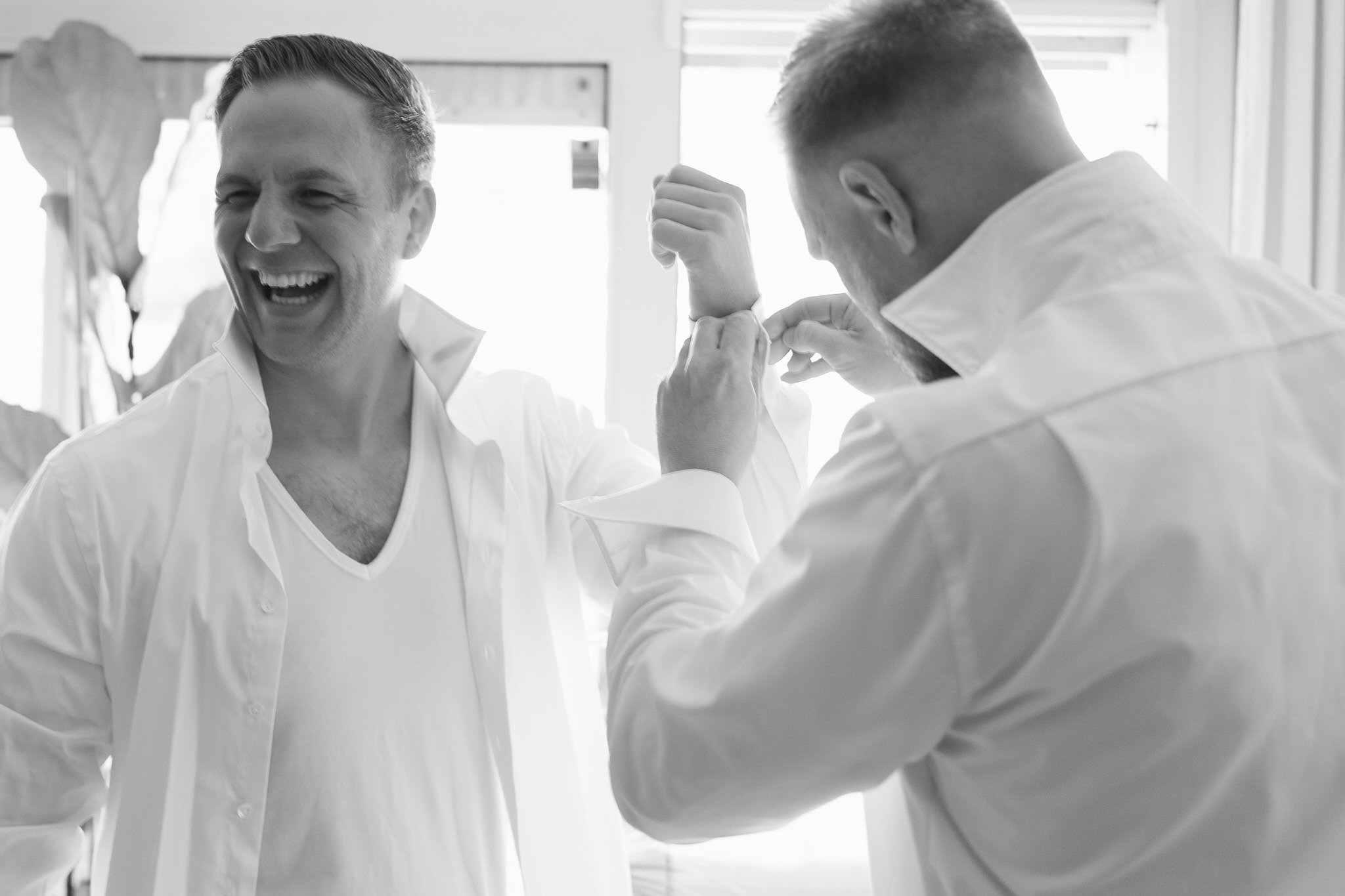
The getting ready moments I've shot there stay with me. A groom laughing helplessly while a friend fiddles with his cufflinks — white shirts, window light, no agenda. A bride in a robe watching the makeup artist work, looking out the window, completely in her own head. These aren't moments I orchestrate. They happen because the pace of a destination wedding is slower, and slower pace means people are actually present.
Analog on Mallorca
Some of the Mallorca images I return to most weren't taken on a digital camera.
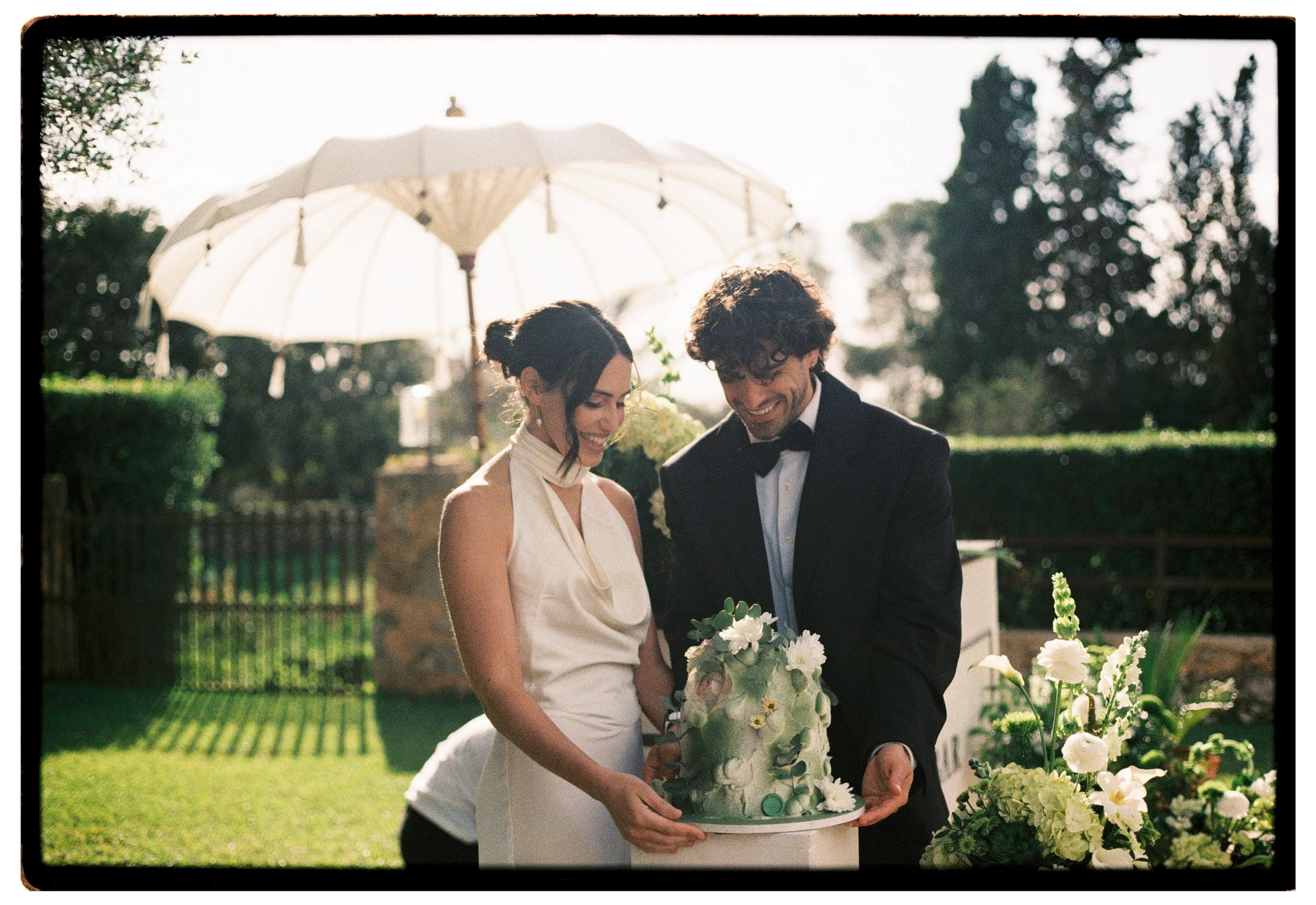
Film and this island suit each other. The warmth of 35mm and the warmth of Mallorcan light occupy the same register. Film also slows you down — one frame, considered — and Mallorca rewards that kind of attention. There's a cliff image I've had for a while: a couple at the edge, the sea behind them stretching to the horizon, shot on film. It's not complicated. But it holds something I can't locate in the digital version of the same moment.
Couples who include analog frames in their coverage get something different — not technically superior, but different in kind. More physical. Something you want to print rather than scroll past.
A few honest things about Mallorca
It's not a secret destination. There's a full industry around destination weddings here — planners, caterers, venues that have done this hundreds of times. That infrastructure is genuinely useful. The logistics tend to work. The vendors know the day format.
What it requires is a guest list that can travel. For some couples, that's the obstacle. For others, it's the point — a smaller day, an intentional group, somewhere that meant something to them before the wedding was ever planned.
The weddings I've photographed on Mallorca have ranged from thirty people in a courtyard to full evening celebrations that ran past midnight. The island handles both. What stays consistent is the quality of the setting — the stone, the light, the sea — and the particular ease that arrives when a couple realises they made the right call about where to get married.
On timing and planning
If you're thinking about Mallorca, the season matters more than most people assume. Late September and October are the best months photographically — the light is at its best, the temperatures are manageable, and the island is less crowded than August.
I travel to Mallorca regularly and have worked across several venues, including Finca Can Estades and private estates along the coast. If you're planning a destination wedding there and want a direct conversation about what the photography side of it looks like, I'm happy to have it.